
Discover the Progressive SEO, an evolving strategy that goes beyond traditional SEO. Delve into techniques and tools for dynamic and adaptive positioning.

Add us to your preferred sources.

In the ever-evolving digital landscape, traditional SEO is no longer sufficient to ensure stable and lasting rankings. With frequent Google updates and increasing online competition, static strategies must make way for more flexible and adaptive methods. Progressive SEO is the answer to this need.
This methodology is based on a continuous and reactive approach, taking into account algorithmic evolutions, changing search intentions, and new ranking opportunities. In this article, you will discover what Progressive SEO is, how it works, and how to implement it to gain a competitive advantage.
What is Progressive SEO?
Progressive SEO is an evolutionary approach to SEO that differs from traditional strategies due to its ability to quickly adapt to changes in Google’s algorithms and users’ new needs.
While traditional SEO focuses on static optimizations (such as meta tags, link building, and keyword research),
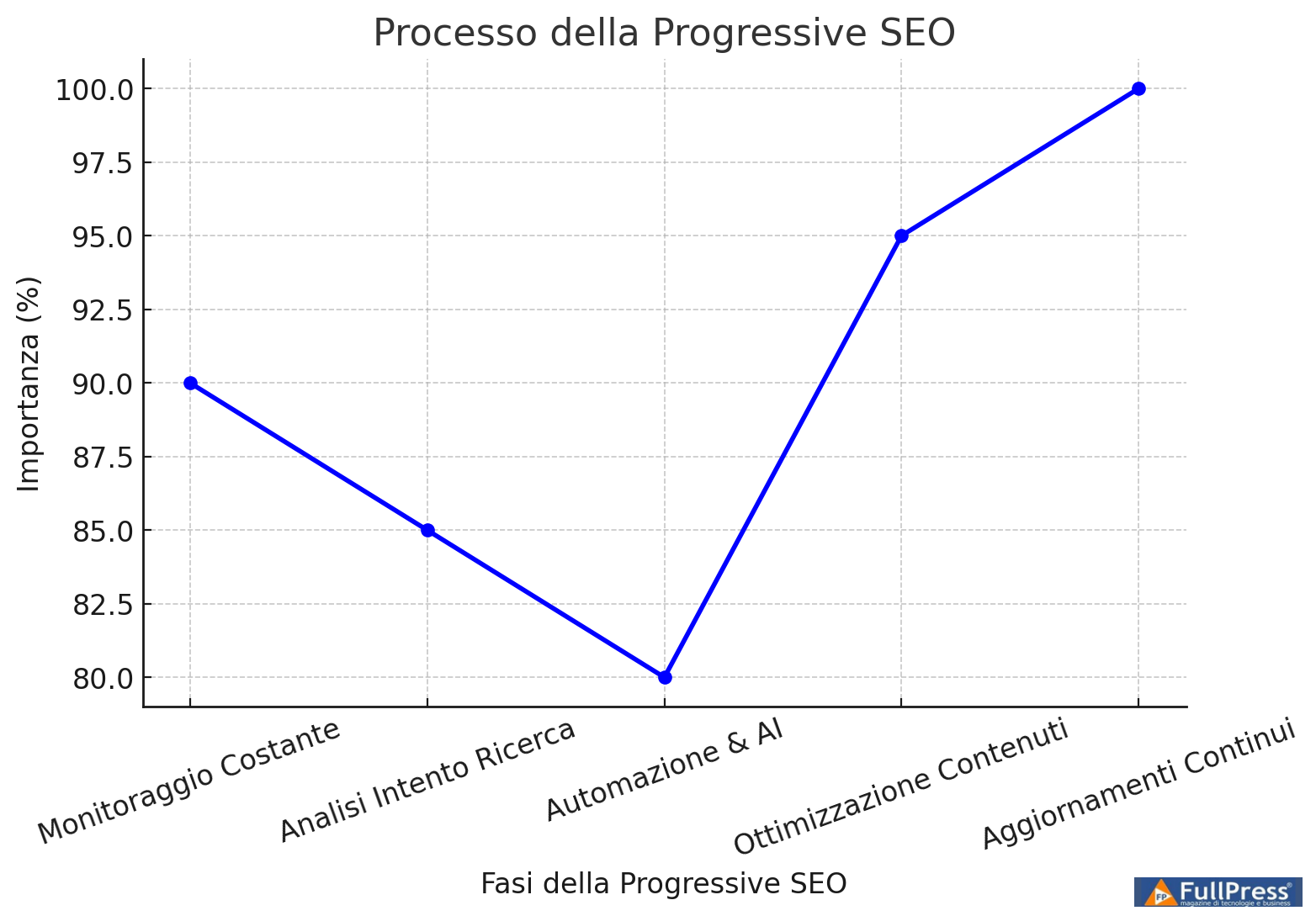
Progressive SEO is a continuous process that involves:
- Constant monitoring of performance and algorithmic updates.
- Proactive adaptation based on real-time data.
- Advanced SEO automation using APIs and artificial intelligence.
- Creation of updated and optimized content for the current search intent.
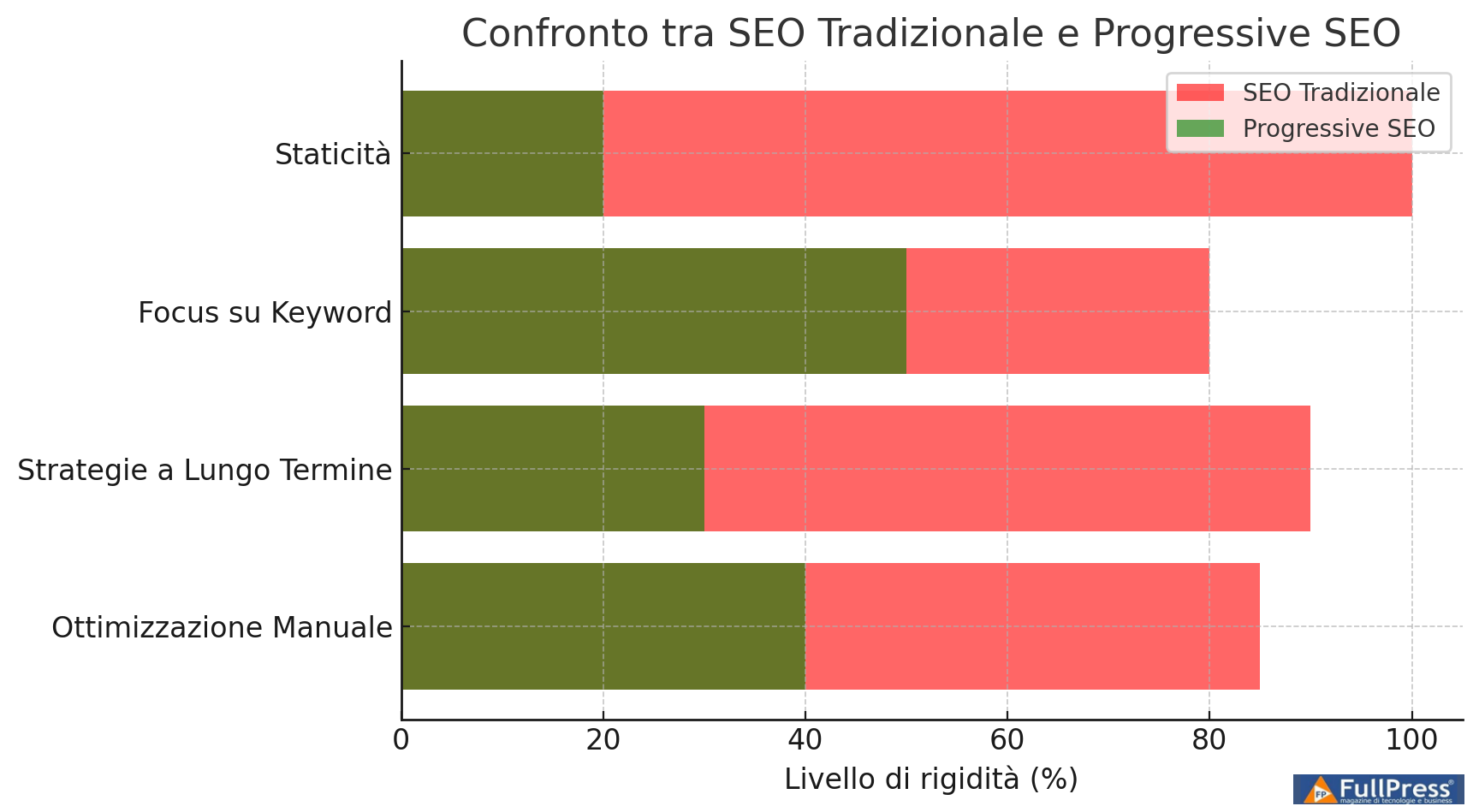
Differences Between Traditional SEO and Progressive SEO
| Traditional SEO | Progressive SEO |
|---|---|
| Static optimizations | Continuous and adaptive optimizations |
| Focus on keywords and backlinks | Focus on search intent and real-time data |
| Long-term strategies | Dynamic and flexible strategies |
| Manual optimization | Automation and machine learning |
Comparison between Traditional SEO and Progressive SEO – Visually demonstrates how Progressive SEO is more flexible and adaptive than traditional SEO – AI Photo
Why is Progressive SEO important today?
Google constantly updates its algorithms with updates likeHelpful Content Update, Core Update, EEAT, and RankBrain. This means thatwhat works today may not work tomorrow.
This is why Progressive SEO is essential:
- It anticipates changes– It doesn’t wait for traffic to drop, but adapts before the algorithm penalizes the site.
- It is based on real data– It doesn’t just optimize based on assumptions, but analyzes ranking data, user behavior, and search intent.
- It improves SEO ROI– It avoids wasting resources on outdated strategies and maximizes results with targeted optimizations.
How to apply Progressive SEO: practical strategies
1. Continuous monitoring with advanced tools
Use tools like:
- Google Search Console and Google Analyticsto analyze clicks, impressions, and user behavior.
- SEO APIs (DataForSEO, SEMrush, Ahrefs, Moz)for real-time updates.
- Artificial intelligence and automationto analyze data faster.
2. Optimization based on Search Intent
It is no longer enough to rank for a generic keyword. It is crucial to analyze the search intent:
- Navigational(e.g., “Facebook login”)
- Informational(e.g., “What is Progressive SEO?”)
- Transactional(e.g., “Buy SEO tools”)
Update existing content and create new pages that respond to these intents in aprecise and detailed.
3. Automation and AI for dynamic SEO
Progressive SEO leveragesautomationto speed up processes such as:
- Content optimization with AI (ChatGPT, Jasper, Surfer SEO).
- Keyword analysis and automated link building with APIs.
- Programmatic SEO for large-scale dynamic page generation.
4. Technical SEO and Core Web Vitals
Google rewards fast and mobile-optimized sites.
- Improve speed with PageSpeed Insights and Lighthouse.
- Optimize UX and interactivity with Core Web Vitals analysis (LCP, FID, CLS).
- Implement structured data to enhance rich snippets.
5. Evergreen content and continuous updates
Content should never remain static. Google loves frequent updates, so:
- Update old articles with new data.
- Add FAQ sections based on current searches.
- Monitor competitors and constantly improve your content.
Case Study: Progressive SEO example in action
Imagine you have a travel and tourism website. A Progressive SEO strategy could include:
- Real-time monitoring of searches for emerging destinations.
- Dynamic creation of optimized pages based on trends.
- Continuous article updating to adapt to new search intents.
- Use of structured data to improve ranking in Google’s rich results.
FAQ: Frequently Asked Questions about Progressive SEO
[sc_fs_multi_faq headline-0=”h3″ question-0=”What is Progressive SEO?” answer-0=”Progressive SEO is an advanced approach to SEO that relies on continuous monitoring, rapid adaptation, and automation to maintain optimal search engine positioning, anticipating Google’s updates.” image-0=”” headline-1=”h3″ question-1=”What are the differences between Progressive SEO and traditional SEO?” answer-1=”Traditional SEO relies on static optimizations and long-term strategies, while Progressive SEO is dynamic, adaptive, and driven by real-time data, focusing on search intent and automation.” image-1=”” headline-2=”h3″ question-2=”Why is it important to implement Progressive SEO?” answer-2=”Google constantly updates its algorithm, so static SEO strategies can become obsolete. Progressive SEO allows you to stay competitive and prevent sudden traffic drops.” image-2=”” headline-3=”h3″ question-3=”How can I apply Progressive SEO to my site?” answer-3=”By constantly monitoring performance with advanced tools, analyzing search intent, automating processes with AI, optimizing site speed, and periodically updating content.” image-3=”” headline-4=”h3″ question-4=”Does Progressive SEO work for all types of sites?” answer-4=”Yes, it can be applied to personal blogs as well as e-commerce sites and news portals, because it is based on principles valid for everyone: continuous updating, data analysis, and adaptation to new trends.” image-4=”” headline-5=”h3″ question-5=”How long does it take to see results from Progressive SEO?” answer-5=”It depends on the competitiveness of the sector and the current state of the site, but generally, improvements in ranking can be noticed within 1-3 months, thanks to dynamic optimization and targeted updates.” image-5=”” headline-6=”h3″ question-6=”How can I stay updated on the evolution of Progressive SEO?” answer-6=”By following authoritative blogs like Search Engine Journal, Moz, Ahrefs, and FullPress, participating in webinars, and experimenting with new data-driven and AI-based strategies.” image-6=”” headline-7=”h3″ question-7=”Does Progressive SEO completely replace traditional SEO?” answer-7=”No, Progressive SEO integrates and enhances traditional SEO, making it more effective and suitable for the continuous changes in Google’s algorithms.” image-7=”” headline-8=”h3″ question-8=”What tools are useful for Progressive SEO?” answer-8=”Some fundamental tools include: Google Search Console and Google Analytics for performance monitoring. SEMrush, Ahrefs, Moz, DataForSEO for keyword research and competitor analysis. Surfer SEO and Frase.io for semantic content optimization. Lighthouse and PageSpeed Insights for improving speed and user experience.” image-8=”” count=”9″ html=”true” css_class=””]
Conclusions
The Progressive SEO is the natural evolution of traditional SEO. Adopting a dynamic, adaptive, and data-driven approach means ensuring a stable and competitive ranking over time.
It’s no longer just about optimizing once and forgetting about SEO, but about continuously adapting to changes to always stay one step ahead of the competition.
Pubblicato in Digital Marketing, SEO
Be the first to comment