
What to expect from SEO in the coming year. Predictions and new trends for the SEO to come, which is more alive than ever.

Add us to your preferred sources.

SEO constantly changes, and predicting the next year can be a difficult task. However, it is crucial to keep up with the latest SEO trends to ensure you are getting the most out of them. Discover the latest SEO news for 2023 and how you can best prepare yourself!
1. Google Ads cedes to organic search
If you examine recent ad revenue reports for Google’s search network, you’ll notice a clear downward trend. The report published in October 2022 states that Google Ads revenue increased by only 4.25%.
Microsoft Bing’s ad revenue is doing slightly better but isn’t showing consistent growth either – the October 2022 report shows only a 16% increase.
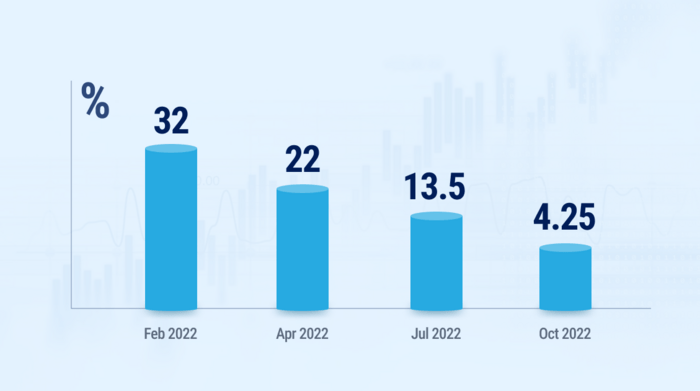
In addition to the decline in ad revenue among search giants, many marketing agencies report that the average costs of many bids have decreased. To ensure these are not just rumors, we checked our own ad campaigns. We saw a decrease in bid price by up to 50% compared to the same period in previous years. The only region unaffected was the US.
Even the IMF’s economic forecasts are far from optimistic: finance experts say that 2023 risks becoming the year of the great recession. Judging by previous years, paid promotion is the first thing companies cut back on when a financial crisis is looming and impacting profits.
Beyond the gloomy economic forecasts, you should keep the human factor in mind. People are less willing to click on snippets explicitly marked as Ad.
This is because most users consider paid ads less valuable than organic results (paid = less trustworthy). By the way, this might be one of the reasons why Google is planning to change the ad label to Sponsored, which seems less appreciated.
The decrease in the popularity of paid ads can only signal one thing: businesses will strive harder to succeed in organic search. In other words, “SEO remains a must.
What to do
If you feel your business should cut back on paid promotions, you have no choice but to optimize better for organic search. Conversely, if you want to overcome the recession by investing more in your advertising, carefully review your ad campaigns. Since bid prices have decreased in some niches and regions, you might find new advertising opportunities that were previously too expensive for you.
2. Featured snippets and zero-click results
While paid promotion takes a back seat, SEO continues to evolve. And businesses will have to keep up with the latest SERP trends to stay afloat in organic search. No matter how difficult it may be. Also, don’t forget about unexpected Google updates.
Today and beyond, featured snippets and zero-click results seem to dominate SERPs. In many cases, they are the same thing – search results that appear at the top of the SERP to present the information a user is looking for.
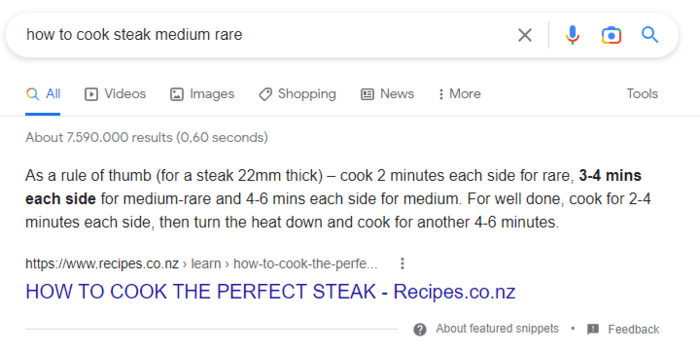
SEO professionals know how to deal with zero-click results. On the one hand, they steal clicks and traffic from other search snippets as users immediately get what they need. On the other hand, studies show that Google users click on featured snippets more often.
It should be noted that different studies report different results depending on the research methodology. The trend is still clear: zero-click results take the lion’s share of clicks. They are really eye-catching and positioned at the top of the SERP, so the probability of a user clicking on them for additional information is quite high.
What to do
Google often uses structured data to extract information from your site into zero-click results. So the first thing you should do is apply schema markup, such as FAQ markup, wherever it’s relevant on your site.

3. EAT remains important
Expertise, Authoritativeness, and Trustworthiness (EAT) is an evergreen trend that renews year after year. And 2023 will be no exception. Especially if paid promotion becomes less popular and everyone shifts their focus to organic search. Moreover, Google recently confirmed that EAT applies to every single query.
There are many factors that contribute to EAT signals: author expertise, backlinks from credible sources like Wikipedia and relevant niche websites, etc. Mentions of niche experts and thought leaders also benefit your site’s EAT significantly. For example, if you write about food and restaurants, then mentions of restaurants, food bloggers, and chefs (both local and world-famous) will do.
The desire to rank higher in SERPs with the help of EAT signals will ultimately lead to an increase in the prices of SEO services because:
- Expert author articles will become more expensive;
- Link-building services like outreach will cost more;
- Authoritative media will increase the price of paid post placements;
- SEO agencies will cost more.
SEO experts also agree that content quality and expertise matter more than ever.
What to do
You should be more careful and conscious when building and developing personal brands. The new reality makes it crucial not only to build your brand but also to make people and search engines aware of it. Be active in public events in your niche and participate in conferences, interviews, podcasts, and so on: all of this will help you and your brand to be famous. This also applies to the personal brands of your content authors.
4. Overuse of AI content
As good authors become more expensive, SEOs will try to save as much as possible on content creation. This is why artificial intelligence content generation tools will become more popular, as they are less expensive than real authors (some AI writers are even free). Although AI-based content authors are improving every day, they are still unable to totally replace humans.
What to do
Although AI content writers will not be able to replace humans, they can help us a lot. Therefore, denying the future and ignoring artificial intelligence is not the best idea: the future is already here. Make AI content creators work for you but be careful not to get your site penalized by Google.
For example, you can generate some content with artificial intelligence to edit it manually: add missing information or remove pieces that are obviously nonsensical. This way, you will add value and avoid the risk of being hit by the helpful content update. AI tools can also be used for automatic localization of web pages. Keep in mind that automatic translations also require manual editing, so uploading tons of raw machine translations to your site is not the best idea.
5. Entities take over keywords
It seems Google has shifted towards entity-optimized pages. So the entity-based optimization approach is becoming more effective than traditional keyword SEO. I think the reason for this lies in the development of the “Knowledge Panel“, and here’s why.
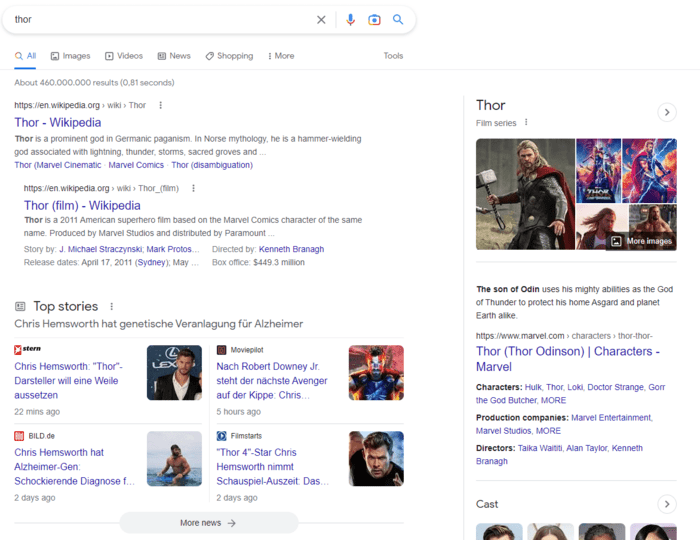
Google understands content with the help of its NLP algorithms. For example, the “NLP API” analyzes a piece of text, identifies the most significant terms (entities), and defines what the text is about. The information retrieved this way is then added to all other data that Google already holds about this or that entity. When there is enough information, Google is able to connect all the dots and can grant an informational card to an entity:
Google’s BERT and MUM algorithms are also trained on NLP, which is why it becomes easier for Google to understand context and form SERPs based on this knowledge.
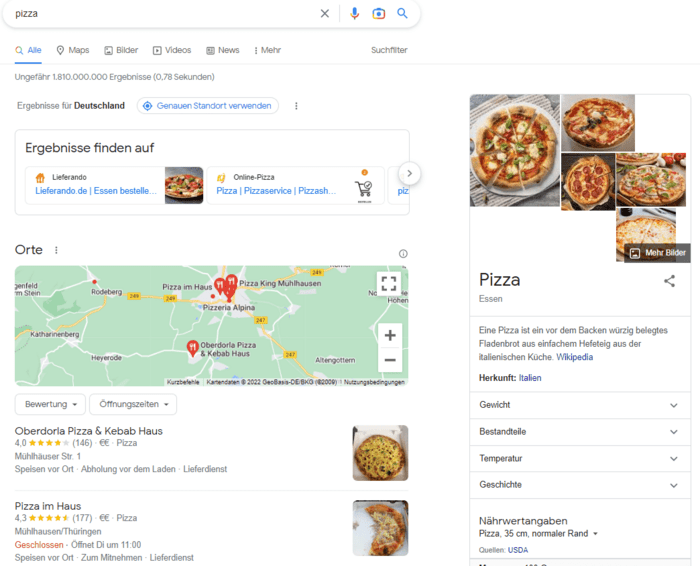
The entity-based SEO is particularly important for local queries. In local search, Google assesses how relevant a query (entity) is to a specific location, and this is one of the crucial factors in how local SERPs are formed.
What to do
You need to make Google understand your entity the way you need it to, so make your entity as significant as possible. And here are a few steps to help you make your entity more prominent:
- Enrich your site content with other entities related to the target one, so Google has enough surrounding context. For example, this is how our user increased local business search performance using entity association. You can also find some general SEO tips, even if your business is not local.
- Create and grow your Google Business Profile (for local businesses). Take advantage of all the features it has, as the more data you provide to Google, the more it knows about you.
- Build backlinks. This is a signal of connection between your entity and other relevant entities. If you have a local business, build local backlinks.
- Encourage users to review your business.
- Try offline marketing to create more buzz around your entity. Offline events are often discussed on social media, which Google also appreciates.
You can check what Google already knows about your entity by clicking on the three dots next to your search snippet:
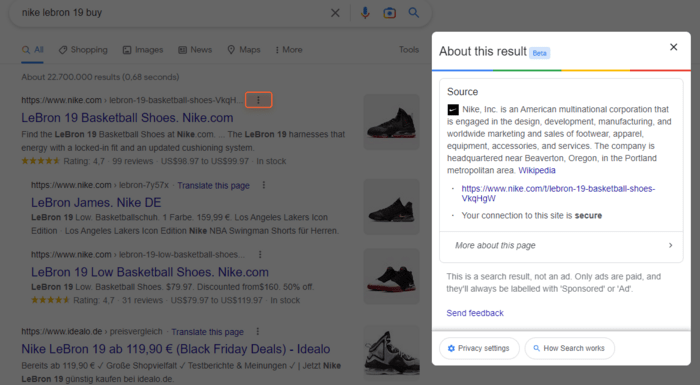
Then, click on More information about this page :
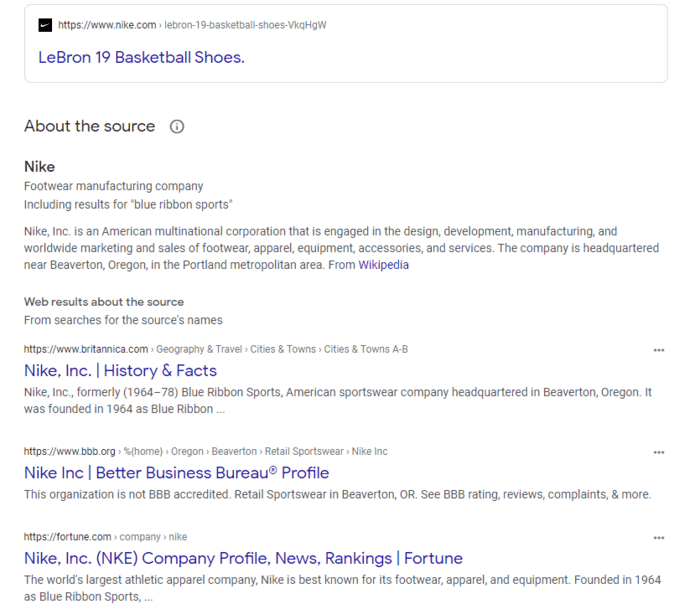
If the information is insufficient, update your site content (pay particular attention to the About Us pages, Our History , etc.). You can also scan your content with Google’s NLP API to see how Google understands text and what entities it finds: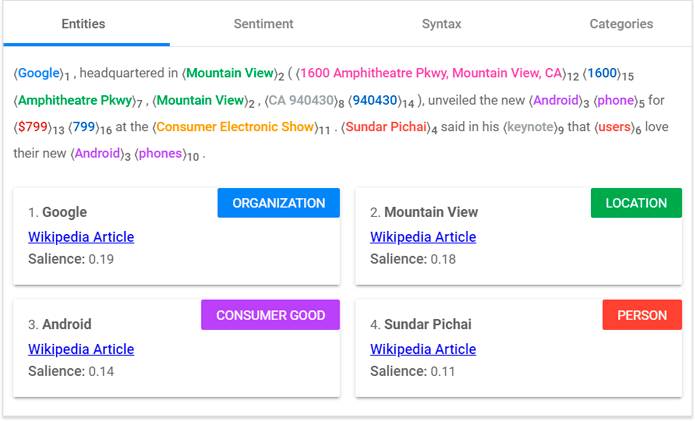
6. Google Shopping is expanding
While there is an increase in offline shopping as people are finally free from COVID-19 restrictions, Google is combining e-commerce structures into one space and actively developing and enhancing shopping features like Merchant Center, Products, Google Shopping, etc. Google is now more than a search engine – it’s an e-commerce aggregator with products, descriptions and reviews. The only thing it doesn’t do is sell merchandise directly; instead, it has a “where to buy” section where seller websites are displayed.
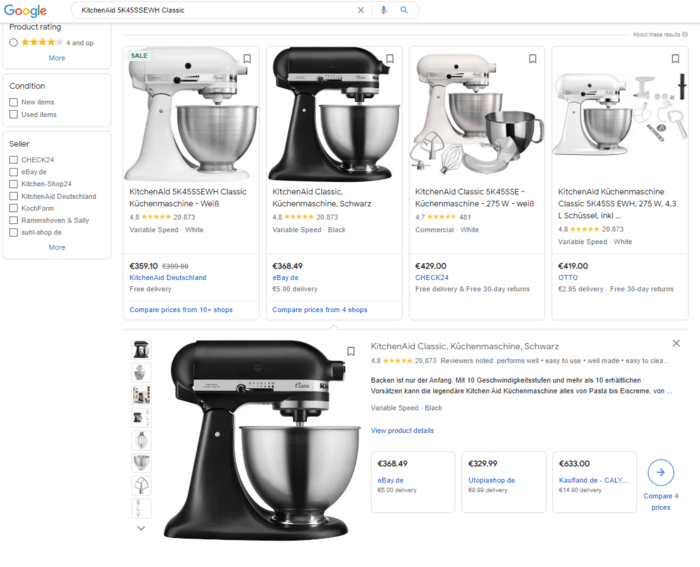
This trend is a hint for e-commerce sites to start adding services like Google Shopping. Then shops will be featured in “where to buy. The great thing here is that you can now easily compare your pricing strategy with your competitors and adapt to stay reasonable.
The not-so-great thing is that Google Shopping will surely take most of the clicks from e-commerce sites and disrupt marketing funnels. Prior to this, users would click on a site snippet, go to the site itself, and continue the customer journey. With Google Shopping, users will land on a specific product page only if they decide to buy an item from that particular site. However, this is the new reality for e-commerce.
What to do
If you run an e-commerce site you have no choice but to add Google Shopping features. Some SERP types feature Google Shopping snippets, and these snippets work just like the featured snippets I wrote about above, i.e., they capture clicks from organic results. So, if you add Google Shopping, you can win back the clicks you would likely lose in organic. Otherwise, your organic clicks might go to your competitors.
7. Visual Search Becomes Widely Used
Havе you heard about Google Lens? It seems the hype around this feature has slowed down recently but it’s just the calm before the storm. Most likely, this “calm” is tied to the refinement of the MUM AI, as Google wants the new feature to be nearly flawless.
Google Lens visual search now works far better than, say, a couple of months ago, and there’s still room for progress. Next, Google will finally roll out its multimodal search to actually allow the MUM algorithm to do what it was developed for. Google needs to clearly “see” images (and maybe videos soon) to understand what’s on them and find similar items on the web. So, to make Google see the object in detail, images on your site should be of high quality.
However, there’s a snag that might cost you rankings. High-quality images are super heavy, which means bad Core Web Vitals and poor PageSpeed metrics. As you know, this will 100% damage your site’s UX and might even affect your rankings. Can we expect Google to become less demanding for CWV and shift benchmarks somehow? That’s the question that remains unanswered.
What to do
Make images a part of your SEO strategy – the best results in Google Images never hurt anyone. Take care of the quality of your images and develop a brand style to stand out from the competition. Design your images instead of using stock ones, and make sure they are properly sized to fit device dimensions correctly.
Remember you have to keep up with Google’s CWV benchmarks. A good idea is to set up a CDN to reduce server load. Lazy loading will also benefit loading times.
Adding schema markup to your pages will allow Google to better understand what’s on the image (a dish, a photo of a person, etc.). In our blog, we have a detailed post on how to set up structured data correctly, so you can learn something from there. Also, don’t forget to write proper alt text for your images.
8. AI-Generated Images Become Popular
AI image generators like Midjourney have been hyped recently. People on the internet talk about them a lot and try to create images on any topic possible. Second, AI tools are capable of creating really beautiful images on condition that you provide them with a detailed prompt. The more details you provide, the better the image.
Testing a couple of AI-generated images with Google’s Cloud Vision API. The results turned out quite curious, as Google managed to recognize objects successfully. Moreover, it even found those elements that were not originally specified in the prompt.
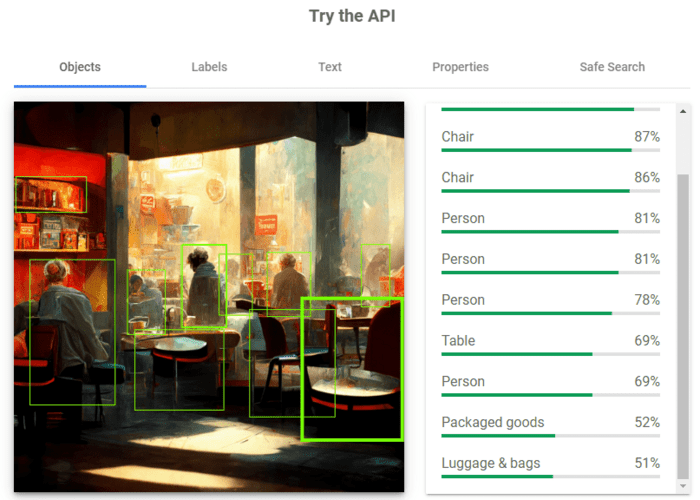
The prompt given to Midjourney was “the bar. Then, I searched for the “coffee shop” in Google Images and scanned a real photo of a coffee shop with the API. Here’s what I got:
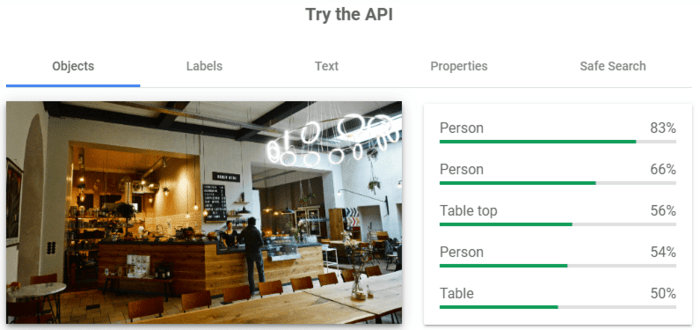
As you can see, Google recognized the same objects in an artificial image and a real photo. Therefore, AI-generated images are detailed enough to be featured in image SERPs if the query is relevant. It seems to me that AI-generated images will be used more often than they are now.
What to do
Actually, there’s not much to do here. Sure, you can try AI tools for your website, but I suggest you don’t overuse them. Not yet, at least, as Google is unsure about how to treat AI images and how they would impact SEO.
Summary
When it comes to Google and SEO trends for the next year, it’s hard to be sure how things will unfold. The only 100% clear thing is that quality will prevail over quantity. So, don’t neglect your SEO and put enough resources into it. Remember that unlike paid ads, SEO is a long-term game with results that last longer.
Source: Link Assistant
Be the first to comment