
Add us to your preferred sources.

Agriculture is undergoing a profound transformation, driven by the need to respond to global challenges such as the increase in food demand, scarcity of natural resources, and growing climate variability. In this context, Artificial Intelligence (AI) is emerging as one of the most promising levers for making the agricultural sector more efficient, sustainable, and resilient.
Through advanced data analysis, machine learning capabilities, and interaction with intelligent sensors and machinery, AI enables the optimization of production processes, prediction of critical events, and support for strategic decision-making in real-time. From targeted crop management to the automation of field activities, applications are increasingly widespread and sophisticated.
The goal is not only to increase yields but to do so more intelligently, reducing environmental impact and maximizing available resources. The adoption of AI in agriculture represents not just a technological evolution but a cultural and organizational transformation poised to redefine the future of the sector.
Obstacles and Priorities for Full Digitalization
The path toward full digitalization is still strewn with structural and cultural obstacles that slow down technology adoption by SMEs. Among the most evident critical issues is the shortage of digital skills, both within companies and in areas less served by educational and technological hubs. The lack of qualified personnel is a tangible bottleneck, especially for micro and small businesses that do not have dedicated innovation resources.
Alongside the skills issue, resistance to change also weighs heavily. In many entrepreneurial realities, a traditional business vision persists, struggling to grasp the strategic value of digitalization. This attitude leads to underestimating the return on investment and postponing decisions that would instead be essential for growth and survival in the market.
From an infrastructural perspective, inequalities persist, penalizing inland or less urbanized areas where access to fast connectivity and cloud services is not always guaranteed. Bridging this gap is a priority, as is strengthening synergies between public and private sectors, universities, research centers, and businesses.
To overcome these blocks and stimulate effective transformation, it is crucial to invest in continuous training, aimed at both young people and entrepreneurs and active workers. In parallel, it is necessary to strengthen public incentives and simplify access to tools like the Transition 4.0 Plan, which offers tax credits for investments in capital goods, software, and training.
Digitalization can no longer be considered an option but a necessary condition for innovating, growing, and competing. Decisively addressing the barriers limiting its diffusion is the first step toward building a more modern, resilient, and connected production system.
Current Technologies and Applications
Artificial Intelligence is already a key player in various areas of agriculture, offering tools capable of improving the efficiency and accuracy of agricultural activities. Currently used technologies are based on machine learning algorithms, computer vision systems, neural networks, and predictive analytics platforms.
Among the most widespread applications:
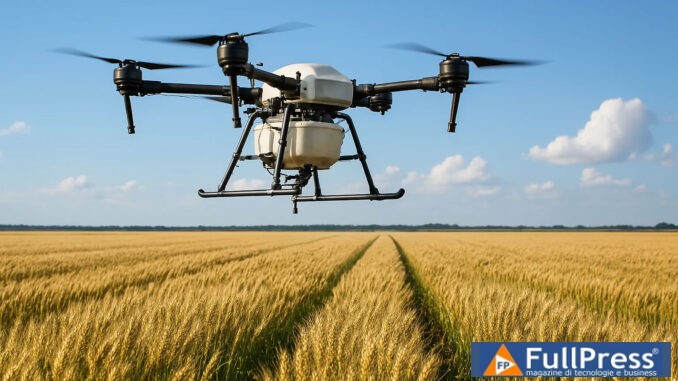
- Crop monitoring through satellite imagery and drones, with automatic analysis of vegetative status, hydration levels, and disease onset.
- Early diagnosis of diseases and infestations through visual recognition and databases trained on thousands of images.
- Yield prediction using models that integrate historical data, weather, soil quality, and cultivation practices.
- Irrigation optimization using smart sensors that detect soil moisture in real-time and control automatic irrigation systems.
- Autonomous agricultural robots used for planting, harvesting, weeding, and localized treatments, reducing the need for manpower and the use of chemicals.
Precision agriculture (on which you can find detailed information on IdeeGreen.it) represents one of the most mature contexts for AI integration, where big data analysis is translated into concrete field actions, with tangible benefits for productivity and sustainability.
Despite the progress, the adoption of these solutions is still uneven, influenced by economic, regulatory, and infrastructural factors. However, successful cases are increasingly numerous, indicating a change in progress that promises to scale up.
Benefits and Impacts on Production Efficiency
The use of Artificial Intelligence in agriculture brings a series of measurable benefits, both at the individual company level and along the entire agri-food supply chain. One of the most immediate effects concerns the increase in productivity, thanks to the ability to plan and manage agricultural operations more rationally and promptly. AI allows for the collection and interpretation of enormous amounts of data in real-time, enabling quick decisions based on objective information.
Another significant benefit is the improvement in crop quality. Through continuous crop monitoring and early identification of any stress or pathologies, it is possible to intervene in a targeted manner and limit damage, maintaining high-quality standards. AI-driven agriculture is also more precise in its use of resources, particularly water, fertilizers, and phytosanitary products, reducing waste and operational costs.
Environmentally, the adoption of AI contributes to more sustainable agriculture. Optimized use of agricultural inputs leads to a reduction in the impact on soil and water resources, limiting the dispersion of harmful substances and preserving soil fertility. Furthermore, intelligent automation helps contain CO₂ emissions related to production processes.
Strategically, AI can enhance the adaptive capacity of farms in the face of increasingly uncertain climatic or economic scenarios. Predictive analytics, simulations, and dynamic models support more informed decisions, making the production system overall more resilient and efficient.
Current Limitations and Barriers to Adoption
Despite the transformative potential of Artificial Intelligence, its adoption in the agricultural sector still faces several structural criticalities. One of the main barriers is represented by the initial costs associated with implementing the technologies, which include the purchase of hardware and software, system installation, and staff training. These investments can be prohibitive, especially for small and medium-sized agricultural enterprises, which constitute the majority of the production fabric in many areas worldwide.
Another significant obstacle is the low digital literacy in rural areas. In many regions, a lack of IT and technical skills makes effective adoption of AI-based solutions difficult, despite their potential benefits. Added to this are infrastructural disparities, such as the lack of stable internet connections or adequate devices for data monitoring and transmission. The issue of agricultural data constitutes a further critical node. Often, collected information is incomplete, inconsistent, or incompatible. Data quality and accessibility are fundamental for the correct functioning of AI algorithms, and their scarcity can compromise the effectiveness of the entire system. Furthermore, the fragmentation of digital platforms hinders full interoperability between devices, software, and supply chain actors.
The aspect related to trust in intelligent technologies should also not be overlooked. The complexity of AI models, often perceived as opaque or difficult to control, can generate diffidence among agricultural operators. Algorithm transparency, the protection of sensitive data, and respect for privacy are crucial elements for promoting conscious and sustainable adoption.
Overcoming these barriers requires an integrated approach involving public policies, targeted training, and partnerships between the technology sector and the agricultural world, with the goal of making AI accessible and useful for everyone.
Pubblicato in Artificial Intelligence
Be the first to comment